Tuesday, 28 April 2015

Medic Mentor - Helping future prospective medics!

There are a few spaces remaining for Medic Mentor's MASTERCLASS.  
 

This course has been specifically designed to help students with their medical school applications by developing important skills essential to the application process. 

This is a very unique course, because there is a strong focus on developing knowledge and skills.  Students will receive continuous personalised support with their medical applications including personal statement help and interview preparation help.

This course is suitable only for year 10-13 students (this includes current year 9 students).

This will be taking place on 18th September at Cardiff University from 10:00-17:15.
 
www.medicmentor.org

 
Topics covered include:
 
  • A history of Medicine and Surgery including important landmark events and recent developments
  • An overview of the pillars of medical ethics
  • Communication and presentation skills
  • Basic teaching skills for students
  • Personal statement 'Toolkit' and common pitfalls
  • Updates on grade boundaries, competition ratios and entrance exams
  • Essential Study and organisational skills
  • CV padding tips
  • Clinical history taking (how to talk to patients) and how to make the most of work experience placements
  • Personal Professional Development packs 
 
MASTERCLASS Students receive personal mentoring following the course which includes:
  • Detailed feedback on personal statements
  • Personal Mentor follow up appointments
  • MASTERCLASS school visits to useful courses in order to develop a greater insight into Medicine
  • Exclusive access to an interactive Facebook group, so students can contact Mentors and ask questions directly
  • Notes and factsheets to add to their PPD packs throughout the year
  • Help and advice arranging work experience
  • Exclusive publishing opportunities.
 
Registration is £100 and there are only a few spaces remaining.  This includes tea & coffee, refreshments and dinner.  Students will be given a PPD pack, exclusive access to online teaching material and certificates of attendance.  This is a highly interactive course and students receive personal feedback on their team working, leadership, teaching and presentation skills.  Prizes will also be awarded to students demonstrating exceptional skills during the course.
 
For more information please visit www.medicmentor.org  for further details about the course, the timetable and to book a place.


Tuesday, 27 January 2015

Chemistry in action at The University of Warwick

Year 10 pupils, an exciting opportunity has been made available by Warwick University for you to take part in a 4 day (3 nights) residential course looking at problems of modern society and how Chemistry can be used to develop solutions.
 
You will have the opportunity to:
 
  • Learn about new and exciting chemical principles.
  • Carry out investigations and experiments using state of the art research equipment.
  • Work as a team to improve problem solving and communication skills.
 
Click on the images below for more details.


Scan the QR code on the second picture or click here to link to the website.

Thursday, 22 January 2015

Hydrogen as a fuel - Blue plaque for Swansea scientist Sir William Grove

With oil reserves being depleted, there is a real need to find an alternative fuel source to power vehicles.  Could hydrogen be that source?

Hydrogen when burnt in oxygen produces a highly exothermic reaction, producing water as its only product:

hydrogen  + oxygen  ------->  water
H2(g)  + O2(g) -------> H2O(g)

We can see the dangers of hydrogen with the impact of the Hindenburg disaster:


The idea of using hydrogen in a fuel cell, whilst being discussed in the news now (January 2015) with Toyota making their patents freely available to companies to help develop technologies, is not a new one. The idea was first developed by Swansea scientist Sir William Grove in 1842!  He is now being recognised with a blue plaque, click on the picture for the BBC News article:

Sir William Grove

Hydrogen is an abundant element with it forming part of water, it is also a major constituent of fossil fuels.  It just needs to be separated to make it useful.  The following clip discusses how hydrogen could be obtained and why it might be useful, you might have to sign into YouTube to watch it:


The theories of Sir William Grove have been developed over the last century and in 2014 Toyota announced at CES (Consumer Electronics Show - global consumer electronics and consumer technology tradeshow) their developments in hydrogen fuel cell technology:


In the space of a year Toyota have developed their first hydrogen fuelled concept car:


Some exciting times ahead in the use of fuel cells for many applications!  Check out the new Toyota Mirai here.


Since originally posting in this 2015 (it is now 2020) the development of hydrogen as a fuel seems to have stalled and gone out of the media spotlight with electric cars and hybrids taking centre stage.  It appears that Toyota are still pushing on with hydrogen fuel cell technology, but the infrastructure is limited.  The pictures below illustrate how limited it is, with the green marks active fuel stations and the red as stations in development.


Thursday, 5 June 2014

WJEC Revison Guides

Specially-prepared revision booklets have been produced by Bangor University with the support of a National Science Academy grant from the Welsh Government.  The booklets contain revision material prepared by experienced Science teachers for the University’s GCSE revision courses, and have been highly praised by both schools and pupils.

Click here to access the Bangor University website where you can download revision guides as pdf files for all three Science area covering the topics for Unit 1 (Year 10) and Unit 2 (Year 11).

Monday, 7 April 2014

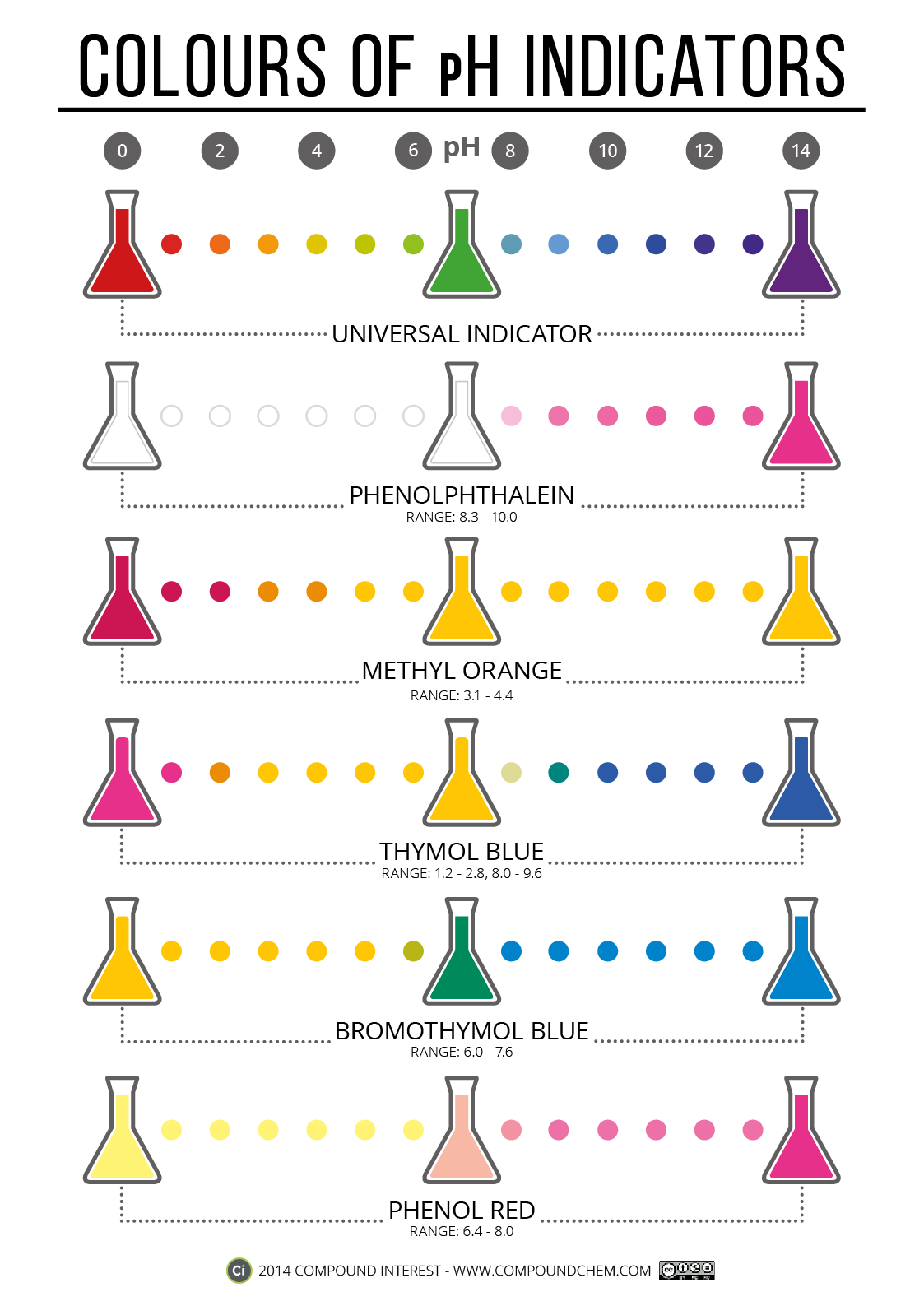
Indicators - Colours and pH ranges

Compound Interest have produced a good poster on Indicators, the colours they are in acid and alkaline solutions, along with the chemistry behind them.  click on the picture below to link to Compound Interest's blog.

http://www.compoundchem.com/2014/04/04/the-colours-chemistry-of-ph-indicators/


Wednesday, 2 April 2014

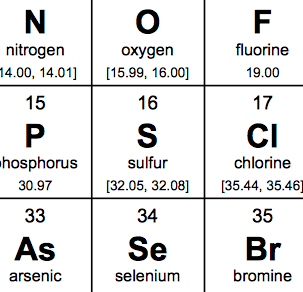
How do you spell element 16? Sulphur or Sulfur?

Having been part of the education system as a pupil and then a teacher, I have been confronted by the question how do you spell element 16? Sulphur or sulfur?

Even as I write this, the spell check on this blog is underlining the word sulfur to tell me it is wrong!  When auto correct is working it automatically corrects sulfur to sulphur. I have always spelt it sulphur having been told to do so by teachers and lecturers alike over many years, and have cheerfully promoted that spelling with pupils.

However an article on 'the chronicle flask' blog has finally made me change my mind.  It identifies that IUPAC (The International Union of Pure and Applied Chemistry) have deemed the spelling of element to be sulfur, and as they set the rules that is the way it should be.

So element 16 is sulfur!

http://thechronicleflask.wordpress.com/2013/11/26/so-how-do-you-spell-element-16/

Click on the picture to read the full article.

Wednesday, 26 March 2014

Spectroscopy in a suitcase

On Tuesday 25th of March Cardiff University visited the school on behalf of the Royal Society of Chemistry to deliver a workshop on spectroscopy to the year 12 Chemistry pupils.  Spectroscopy forms an important part of the F322 AS module.  Dr Dayna Mason introduced the topic and got the pupils involved in interactive tasks to identify unknown organic compounds by using an infra-red spectrometer (a piece of equipment that they would only be able to use at university level) to test liquid samples.


Pupils testing samples on the IR-Spectrometer
The pupils compared their experimental findings with mass spectrogram results and databases to find their unknown organic compounds.


For more information on spectroscopy and 'spectroscopy in a suitcase' visit the RSC website - http://www.rsc.org/learn-chemistry/collections/spectroscopy